
In the past few months, a handful of countries from around the world have experienced a surge in popular insurrections due to dissatisfaction with governments and public services as well as resentment against perceptibly corrupt elites. This was the case in Nepal and Madagascar during the month of September, with popular movements launched by the younger generations of citizens (especially Gen Z) leading to tangible consequences such as government resignation and mass State paralysis. In Nepal, for instance, protest movements and debates amongst the opposition’s most prominent activists were settled on servers on the Discord app, allowing for unprecedented levels of collective online organization amongst young protesters nationwide.
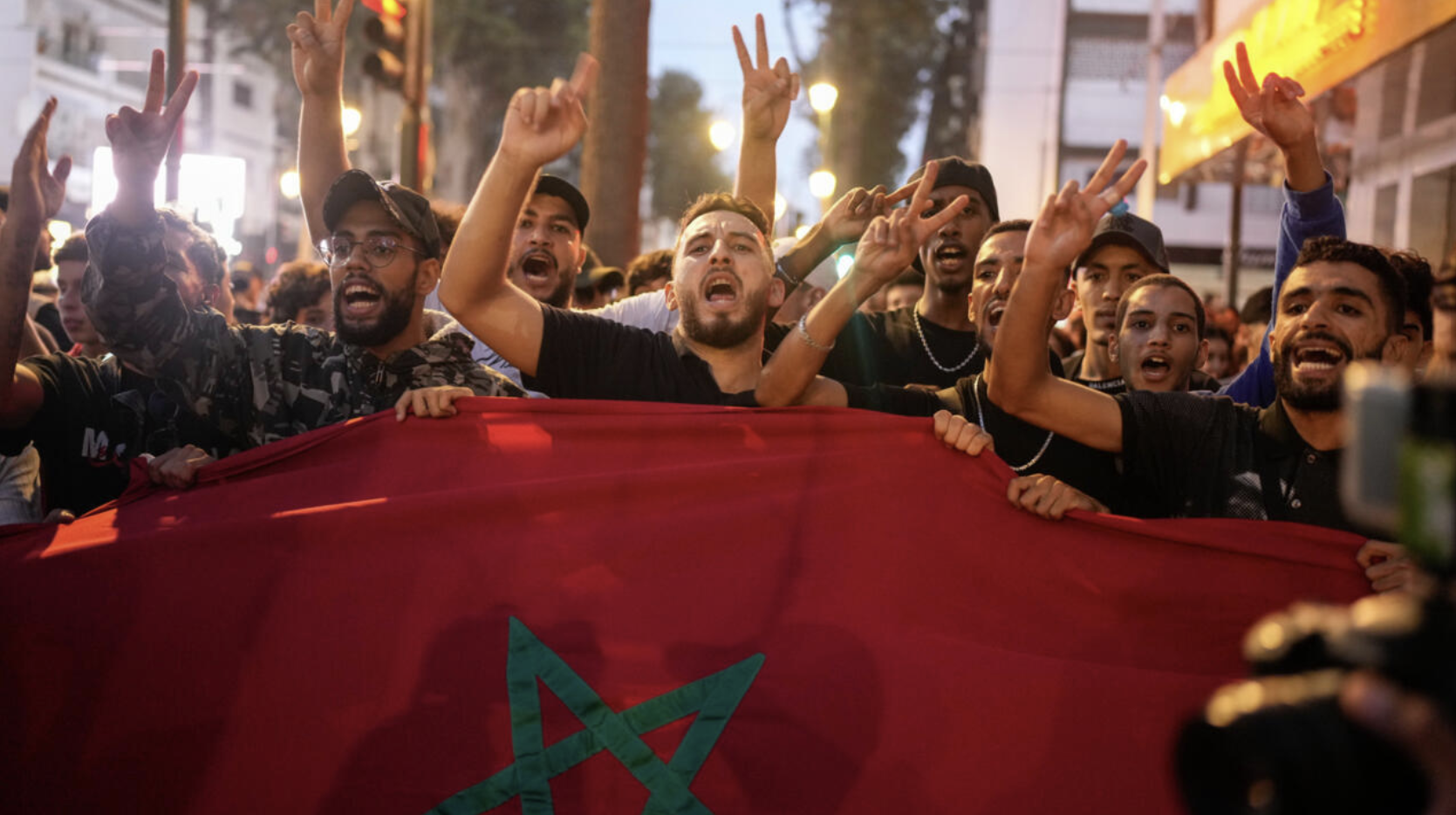
What followed later this month were mass protests all over Morocco and the advent of the GENZ212 movement (+212 being Morocco’s telephone country code). Multiple phenomena and countrywide issues were attributed to have caused such uprisings to take place. One of the more popular claims was about the Moroccan State’s lack of public funding of critical establishments such as schools and hospitals. A Facebook post which provided scathing criticism of a public hospital’s lack of hygiene and maintenance has since gone viral and influenced Moroccan public opinion. Another insult to injury according to many is the simultaneous undertaking of massive infrastructure projects (such as high speed railways between major cities and stadia for the 2030 FIFA World Cup) which are mainly funded by GCC countries such as Saudi Arabia and the UAE, with some mentioning Morocco’s signature of the Abraham Accords, subsequent normalization of relations with the State of Israel and manufacturing of military equipment to the latter as addition source of tension. The stark contrast between the extravagance of the Gulf-led vision for a futuristic Morocco and the reality of one of the most indebted governments in all of Africa needing the help of private individuals and companies for funding has generated massive controversy and disappointment amongst its people.
Many fear a lack of sustainability and material independence in the long term, which has been a good enough reason for them to take to the streets in the wake of ramping dissent against a royal family and a king who has maintained a religiously authoritative presence in the imagination of many Moroccans up until the recent events.
Just like in Nepal, the youth doesn’t just spread their messages in the streets of the physical world but also through social media platforms, meme pages, group chats and message broadcasts: a popular Discord server bearing the name of GEN Z’s protest movement has gained notoriety as a center to exchange ideas, visions and initiatives alongside a revolutionary assembly free of any physical realm constraint.
BIBLIOGRAPHY
CBC News. “How a Gen Z Revolution Upended Nepal’s Government.” CBC News, September 24, 2025. https://www.cbc.ca/news/world/nepal-youth-protests-social-media-1.7642523
Halifax CityNews. “How Gen Z Protesters Brought Down Madagascar’s Government and Now Want the President Out.” Halifax CityNews, October 7, 2025. https://halifax.citynews.ca/2025/10/08/how-gen-z-protesters-brought-down-madagascars-government-and-now-want-the-president-out/
Middle East Council on Global Affairs (MECouncil). “Morocco’s Youth Protests and the Limits of its Governance Formula.” MECouncil, October 11, 2025. https://mecouncil.org/blog_posts/moroccos-youth-protests-and-the-limits-of-its-governance-formula/
The New Arab. “Morocco’s Gen Z Protests Expose Deadly Healthcare Crisis.” The New Arab, October 2, 2025. https://www.newarab.com/features/moroccos-gen-z-protests-expose-deadly-healthcare-crisis
Middle East Eye. “How Morocco’s High-Stakes Gamble on Israel Could Be Its Downfall.” Middle East Eye, June 3, 2025. https://www.middleeasteye.net/opinion/how-moroccos-high-stakes-gamble-israel-could-be-its-downfall
Trading Economics. “Morocco Government Debt to GDP.” Trading Economics. Accessed October 12, 2025. https://tradingeconomics.com/morocco/government-debt-to-gdp