
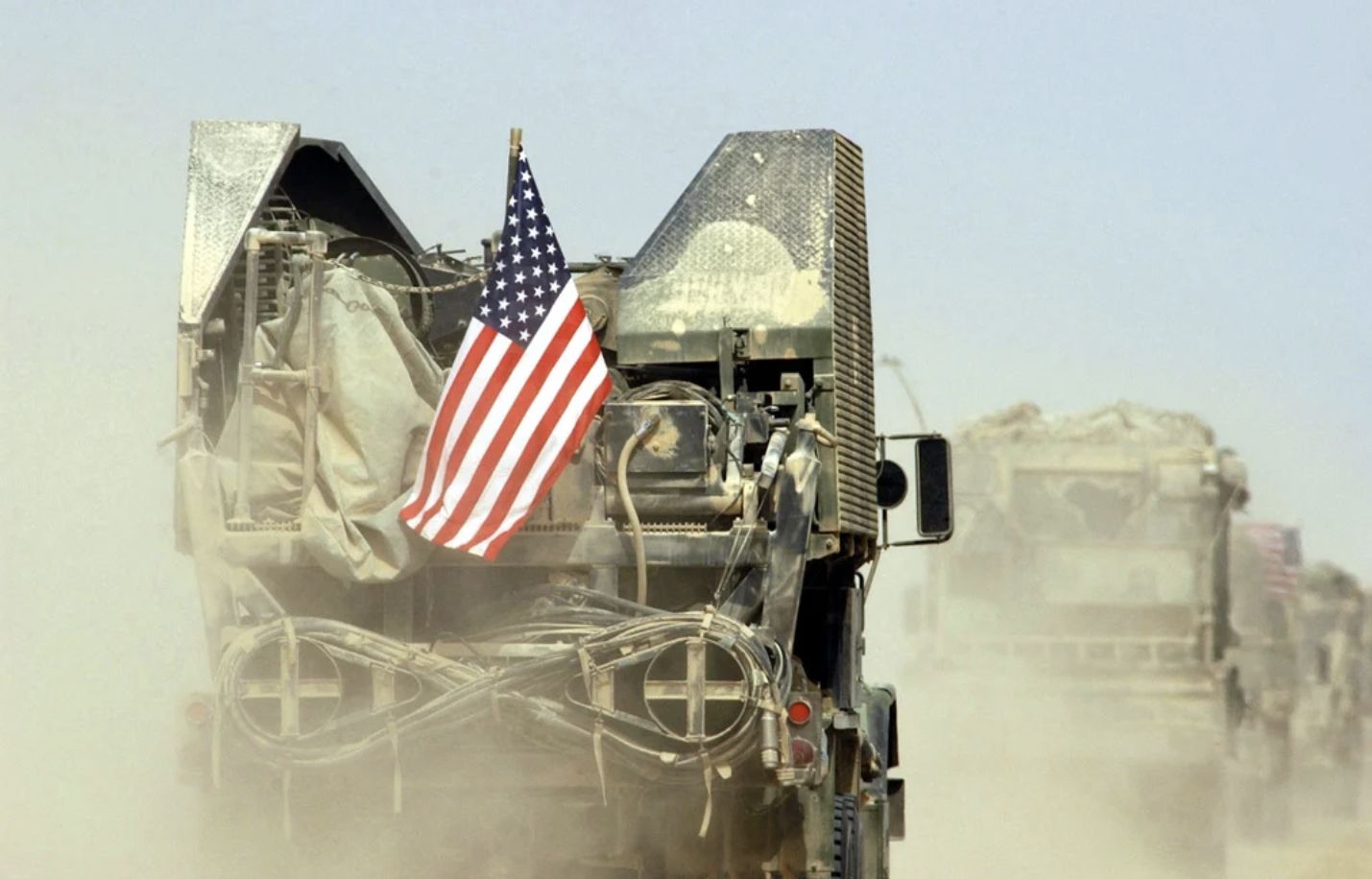
Consistently throughout history, Western superpowers have justified their political and military interventions across the Middle East through the promise of democratic salvation. Western invasions in Middle Eastern domestic politics have long been framed as a moral imperative to rescue the region from authoritarian rule. However, a striking paradox emerges when these efforts are examined historically: projects so boldly advertised as missions in the pursuit of liberal democracy consistently produced opposite, authoritarian outcomes. As seen in Iran in 1953, Iraq in 2003, and Libya in 2011, Western-led interventions that professed to have liberated nations from authoritarian governance instead entrenched instability, empowered coercive actors, and fractured the foundations necessary for democratic development. The very strategies enacted under the disguise of democratic liberation were the catalysts of failure in post-intervention regime development.1
For the purpose of this essay, “Western interventions” will be understood as the political actions and military operations, whether directly or covertly, taken by Western powers—the United States (US) and the United Kingdom (UK), in particular—with the proclaimed intention to shape, or establish supposedly better governance in the Middle East. “Liberal democracy” will refer to a regime type grounded in accountable institutions, entrenched civil liberties, and the rule of law, and “authoritarian regime” as its inverse: centralized authority, restricted civil and political rights, and lack of institutional accountability.
This essay argues that Western interventions in the Middle East, illustrated in the cases of Iran, Iraq, and Libya, ultimately subverted the very democratic objectives they claimed to advance by actively facilitating the consolidation of authoritarian governance. To demonstrate this pattern, the essay will employ a self-constructed evaluative framework, designed to assess the effectiveness of each intervention in producing liberal-democratic outcomes. The three criteria are, first, the establishment of functioning democratic institutions, second, the protection of civil and political liberties, and third, the achievement of political stability under the rule of law. Across all three case studies, Western intervention consistently undermined institutional development, eroded fundamental freedoms, and cultivated chronic instability, revealing the troubling paradox at the heart of the West’s democratic ambitions in the Middle East.2
Evaluative Framework: Measuring Liberal Democracy in Post-Intervention Regimes
To credibly assess whether a regime qualifies as a liberal democracy, it is crucial to evaluate factors beyond solely the occurrence of elections: insight into the profound structural underpinnings of democratic governance is crucial. In this essay, the extent of liberal democracy in Middle Eastern regimes following Western intervention will be measured by examining three prominent indicators: development of democratic institutions, protection of civil and political liberties, and enforcement of the rule of law as political stability, understood in this essay as the accountability of the executive under its own legal framework, thus gauging the success of each case.
The important role that institutions play in measuring liberal democracy is strongly enforced by scholars of the Varieties of Democracy (V‑Dem) Project, in their 2025 “Democracy Report.”3 V-Dem highlights the critical role of democratic structures such as transparent elections and functioning political parties, but also of “horizontal” mechanisms of institutional accountability, such as judicial and legislative limitations on the authority of the executive, and the absence of military rule, in defining genuine liberal democracy. This focus is further emphasized in V‑Dem’s “Liberal Component Index” (LCI), which explicitly measures these institutional features under the premise that unconstrained executive power can easily overpower democratic norms.4 Evaluating state institutions provides a crucial lens into the organization, structure and, crucially, constraints on executive power, highlighting a fundamental component of liberal democratic governance.
Political and civil rights, such as freedom of belief, expression, and association, are defining characteristics of an authentic liberal democratic order, as argued by scholars of Freedom House in their “Freedom in the World” report.5 The report extensively addresses the real-world application of political and civil liberties beyond theoretical frameworks. Freedom House emphasizes the limits of mere legal guarantees of political and civil rights in assessing levels of democracy; liberties that uniquely exist nominally are insufficient to determine democratic governance.6 Similarly, V-Dem employs this ideology in their “Political and Civil Liberties Index”, marking the implementation of freedom of expression and association in particular as core indicators of liberal democracy.7 These liberties are the vessels by which domestic populations can hold governments accountable and engage in civil participation; they are the foundations of liberal democratic regimes.
Political stability, which is to be understood as consistent, orderly governance that is legitimized among its domestic population, is arguably the most notable indicator of successful liberal democracy. It is most reliably achieved and measured through the enforcement of the rule of law. Entrenched legal frameworks limiting the authority of the executive ensure consistent governance with fewer abuses of power, as argued by V-Dem scholars.8 Their LCI illustrates an indisputably strong correlation between weak or unenforced rule of law and political volatility, civil unrest, and undemocratic political landscapes.9 Evaluating the enforcement of accountable legal frameworks is a true indicator of the capacity of a regime to maintain political stability: a central pillar of liberal democracy.
The 1953 US and UK-backed Coup d’État in Iran
The covert actions of the Western powers behind the 1953 coup d’état in Iran established a fundamental precedent for their conduct in Middle Eastern domestic politics: entrenching their own power in the international system by dismantling democracy and fostering authoritarian legacies to follow. Mohammad Mossadegh, who served as Iran’s democratically elected Prime Minister from 1951-1953, pursued a political trajectory intending to reclaim national sovereignty, most notably through his initiative to nationalize Iranian oil resources and release them from foreign control.10
Mossadegh sought to redirect the country’s resources towards domestic development rather than foreign profit. This was a key source of his deeply rooted popular domestic legitimacy, and also what led Western powers to perceive him as a destabilizing threat to their hegemony, needing in their logic to be eliminated.11 As the majority shareholder in the Anglo-Persian Oil Company (APOC), its most lucrative foreign asset, the UK felt existential pressure not only on its economic state, but its pedestal in the broader geopolitical order. Iranian defiance could inspire similar nationalist movements across the Middle East, ultimately undermining Western hegemony in the international system.12
In a CIA-backed coup, Operation AJAX, the US and UK joined forces, not just simply to recover influence, but to assert full dominance over Iran’s oil and ultimate political direction, in an overthrow strategically designed within a Cold War context. Propaganda campaigns depicting Mossadegh as a covert communist ally, combined with calculated media infiltration and manufactured civil unrest, formed the core strategies of the West to tarnish Mossadegh’s domestic “incorruptible image.”13 These efforts were framed by the broader narrative that his removal served in the interest of the global defence of democracy and protection from Soviet infiltration, even as this intervention permanently dismantled Iran’s democratic order.14 The West’s strategy was therefore not solely about Mossadegh’s assassination, but about nullifying any possibility of the Iranian public advancing nationalist aspirations that impeded Western geopolitical interests, regardless of repercussions on democracy and regime stability.15
Following the success of the coup, the West’s professed aims for shaping governance in Iran explicitly shifted from supporting liberal democracy to blatant facilitation of autocracy. This new position was solidified by US ambassador Loy Henderson’s brazen statement that the United States will back “an undemocratic independent Iran” rather than risk elections that might return nationalist forces to power.16
Post-Intervention Regime Assessment: Iran
Western interference in Mossadegh’s democratically-elected regime effectively eliminated any prospect for sustainable democratic institutions in Iran. The US and UK deliberately installed an authoritarian regime following the coup to serve their geopolitical interests, the monarchy of Shah Mohammad Reza Pahlavi.17 The installation of the regime inflicted irreparable damage on an otherwise consistent and resilient democratic system by eliminating the structures and institutions necessary for liberal democracy as they are defined in the V-Dem framework.18
The Western-installed Pahlavi dynasty consolidated repressive authoritarian governance, abolishing pre-existing democratic institutions entirely. The royal dictatorship was built upon unconstrained executive power, and persistently undermined the will of its people with the Shah as its figurehead: the gatekeeper of ultimate authority and political stability in the nation.19 Infinite centralized power in the hands of the executive is in direct violation of the criteria for democracy outlined in the V-Dem Report and LCI. Mossadegh, who was elected through a well-functioning democratic infrastructure and sustained by profound domestic legitimacy, championed both democracy and national independence. It is for this reason that he was recognized as the “embodiment of Iran’s constitutional movement.”20 The nation could have developed a legacy of continued, consolidated democracy, had it not been for the geopolitically greedy, covert operations of the West.
As emphasized in both Freedom House and V-Dem Reports, liberties must be implemented “in practice, not solely on paper,” to enable citizens to hold the government accountable and participate in civil life.21 As a newly formed security state, Iran’s authoritarian Pahlavi regime operated an extensive secret police and intelligence apparatus, the SAVAK, designed to crush civilian dissent. The SAVAK was weaponized as a “brutal tool to monitor and crush opposition” and “effectively and mercilessly restricted all forms of internal opposition,” demonstrating the sheer nonexistence of political and civil liberties at both nominal and on-ground levels.22
A core requirement of liberal democracy, as outlined by the V-Dem LCI, entrenched legal frameworks limiting the authority of the executive, was systematically violated by the Shah’s regime. The rule of law was persistently violated, as illustrated by the shift in policy agenda to fit the “personal direction of the monarch;” the rule of law was dominated by royal prerogative and military control under the Shah, deliberately repressing any opportunity for democratic re-emergence.23 Additionally, the Shah lacked substantive domestic legitimacy, as the regime was widely perceived as a puppet of the West, operating in violation of the Iranians’ sovereign interests. Therefore, his political survival depended entirely on external forces, revealing the fragility of Iran’s political state under his authority.24
The 2003 American Invasion of Iraq
Described as “one of the biggest foreign policy blunders of the Cold War era,” the 2003 US-led invasion of Iraq directly implemented prolonged repression and instability post-Saddam Hussein’s regime.25 The invasion and occupation to follow were presented by American officials as a campaign to dismantle Hussein’s dictatorship with the objective of global democratic advancement, yet grounded in the misguided belief that Iraqis would simply yearn for democracy conducted by the leaders of the freedom agenda once the regime was toppled. It is indisputable that, despite professed objectives for liberal democratization, the US rendered Iraq a “weak state with a highly fragmented security system.”26
One of the US’ most consequential miscalculations was operating under the assumption that Iraq would simply be a political “blank slate” after the fall of Hussein’s dictatorship, overlooking the deeply embedded dynamics of ethnic and sectarian identity politics that fundamentally shaped the Iraqi political landscape and capacity to adopt a new regime.27 Addressing conflicts with the Iraqi Kurdish population and tensions between Sunni and Shia sectarian groups should have at least been considered, if not fully resolved, before attempting to establish a new system of governance in Iraq. The US overlooked this entirely, attempting to build a completely new political system on a fractured foundation, which they only exacerbated by failing to confront these underlying divisions.
Additionally, US counterinsurgency strategies were fundamentally flawed, causing extensive collateral damage and the detention of innocent local citizens. The US approach fueled intense resentment and anger among the Iraqi population, crucially undermining any chance at establishing domestic legitimacy: an essential prerequisite to the adoption of a new regime, especially one so radically different from its predecessor. The cost of these failed strategies and colossal miscalculations was the collapse of the sovereign, stable, and self-reliant state that the U.S. proclaimed their invasion would ultimately create, and the legacy of instability, authoritarianism, extremism and violence that continues to tarnish Iraq’s political landscape today.28
Post-Intervention Regime Assessment: Iraq
The outcomes of the 2003 U.S. invasion and occupation of Iraq do not fulfill the criteria for genuine liberal democracy as defined by the V-Dem project’s methodology, particularly concerning the Liberal Component Index (LCI).29 The post-invasion state-building project, which aimed for an Iraq that was “sovereign, stable, and self-reliant,” produced a chronically weak and dysfunctional state that failed to establish effective democratic institutions, constrain executive power, or uphold the rule of law.30 As direct evidence, the 2024 LCI report places Iraq’s score at 0.28 (on a scale where 0 is the least liberal and 1 is the most), ranking it alongside other regions categorized as having low institutional liberalism.31 In parallel, Freedom House rates Iraq in its 2025 report as “Not Free” (31/100).32
While Iraq began holding regular, competitive elections after 2003, democratic governance remains impeded in practice. The democratic structures were immediately subverted by the underlying conflicts for dominance, which the US neglected throughout the period of its invasion and, in turn, intensified, as competitions for group dominance instrumentalized democratic institutions as weapons to advance exclusionary goals.33
The fundamental lack of public acceptance of the American invading and occupying forces, and by extension, the regime, provoked limitless resistance and political instability, fuelling the rise in extremist groups. The US’s misguided counterinsurgency efforts gave rise to extreme violence and state collapse; blame for the rise of the Islamic State (ISIS) can be directly attributed to the United States’ rash conduct and would have arguably never emerged had the US not intervened.34 The intervention led to a situation in which non-state armed actors “captured or merged with parts of the state,” resulting in deliberate political authoritarianism under a system lacking legitimacy at its grassroots.35
The 2011 NATO Intervention in Libya
The North Atlantic Treaty Organization’s (NATO) military intervention in Libya was framed using democratic and humanitarian language, with the Responsibility to Protect (R2P) doctrine at its forefront, amidst the removal of the Qaddafi dictatorship regime. However, underlying Western geopolitical interests, colonial assumptions, and the negligent approach of prioritizing speed and risk aversion directly generated further political instability and entrenchment of authoritarian dynamics.36 The R2P doctrine embodies a “paternalistic model of state power and political authority” in which “political representation is eliminated by security.”37
Illustrated by the case of Libya and repeatedly across the Middle East and North Africa, this approach inherently delegitimizes existing domestic political structures and societal realities. It forcibly imposes Western liberal democratic frameworks through intense coercive, bloodshedding means, and, instead, fertilizes authoritarian foundations. The distinctive “rapidity and casualness” of conduct towards the Qaddafi regime illustrates the grave shift in Western strategy from containment to radically violent overthrow, inflicting irreparable damage in Libya and beyond: the broader framework of international foreign policy norms.38 This recklessness sparked further widespread civil polarization and instability in the wake of the Arab Spring in Libya, leading to prolonged conflict and violence rather than stable, democratic outcomes. It is for this reason that the state of affairs in post-intervention Libya is classified as a “collapsed state,” plagued by persistent internal conflict.39
Post-Intervention Regime Assessment: Libya
The state of affairs in post-intervention Libya remains incredibly fragile, characterized by intensified competition for space, resources, and survival. Although Libya experienced some democratic institutional structures after the intervention, as its 2012 general elections were considered free and fair, this was extremely short-lived. By 2014 and still to this day, Libya has been engulfed in civil war between two rival governments, and new elections have been repeatedly postponed with no expectation of being held anytime soon.40 Additionally, Freedom House, in its 2025 Report, ranked Libya as “Not Free” with a score of 10/100.41
The NATO intervention and Qaddafi’s violent overthrow left behind a hollow state, with barely functioning administrative and governing institutions: the post-Qaddafi regime struggled with immense apprehension about its basic domestic legitimacy for governance. NATO’s negligent approach of “virtuous war” emphasizing speed and “no boots on the ground” was fundamental to the colossal collateral damage they inflicted, leaving the country in a “chaotic and dangerous postwar environment” produced by Western superpowers.42
Conclusion
To conclude, as illustrated in Iran in 1953, Iraq in 2003, and Libya in 2011, Western interventions in the Middle East have systematically failed to produce liberal-democratic outcomes, instead entrenching authoritarianism, instability, and long-term political fragmentation. Using the evaluative framework developed in this essay, examining the criteria of democratic institutions, civil and political liberties, political stability through the rule of law, patterns of Western powers prioritizing geopolitical interests, risk-averse military strategies, and ideological assumptions over the structural and societal foundations required for democratization throughout their missions in the Middle East, have been revealed as catalysts for authoritarian consolidation.
In the case of Iran, the 1953 coup dismantled a well-entrenched democratic order to install an authoritarian, royal dictatorship that eliminated democratic institutions, stripped all political and civil liberties, and abolished the rule of law; it not only destroyed Iran’s democratic trajectory but also entrenched a legacy of political repression and instability that would shape decades of unrest. Similarly, the case of the Iraq invasion illustrates how neglecting structural realities, such as sectarian divisions, the need for legitimate governance, and institutional accountability, produced a chronically weak state incapable of constraining authoritarian behaviours. The United States’ failure to anticipate or address the complexities of Iraqi society fostered institutional collapse, widespread violence, and the rise of extremist groups, fundamentally contradicting its professed democratic aims. Finally, the Libyan case represents the most extreme collapse: a rapid, militarized intervention justified under humanitarian rhetoric that only generated a fragmented state without coherent institutions, protection of liberties, or enforceable law. The country’s ongoing civil war and political vacuum stand as stark evidence of the long-term destabilizing consequences of NATO’s strategy.
Ultimately, this analysis reveals a fundamental paradox between Western rhetoric about global liberal democratization and its outcomes; Western interventions in the Middle East invoked the language of democracy while employing strategies that were structurally incompatible with democratic outcomes. By subverting the development of effective democratic institutions, the abolition of civil liberties, and the destabilization of political order through lack of rule of law, these interventions not only failed in their stated objectives but also contributed to long-term authoritarian entrenchment and regional insecurity. The cases of Iran, Iraq, and Libya, therefore, illustrate the colossally destructive consequences of Western interventions, that continuously demonstrate a prioritization of self-interested geopolitical aims over genuine democratic empowerment.
FOOTNOTES
- Phillip Cunliffe, Cosmopolitan Dystopia: International Intervention and the Failure of the West (Manchester: Manchester University Press, 2020): p.10
- Roger D. Petersen, Death, Dominance, and State-Building (Oxford University Press, 2024): p.4
- Marina Nord et al., Democracy Report 2025: 25 Years of Autocratization – Democracy Trumped? (Gothenburg: V-Dem Institute, University of Gothenburg, 2025).
- V-Dem Institute, “Liberal Political Institutions Index, 2024.” Distributed by Our World in Data. 2025, https://archive.ourworldindata.org/20260119-070102/grapher/liberal-political-institutions-index.html.
- Yana Gorokhovskaia and Cathryn Grothe, “The Uphill Battle to Safeguard Rights: Freedom in the World 2025,” Freedom House, 2025, https://freedomhouse.org/report/freedom-world/2025/uphill-battle-to-safeguard-rights.
- Gorokhovskaia and Grothe, “The Uphill Battle.”
- V-Dem Institute, “Liberal Political Institutions Index.”
- V-Dem Institute, “Liberal Political Institutions Index.”
- V-Dem Institute, “Liberal Political Institutions Index.”
- Ervand Abrahamian, “The 1953 Coup in Iran,” Science & Society 65, no. 2 (2001): 182–215, http://www.jstor.org/stable/40403895.
- Fawaz A. Gerges, The Great Betrayal: The Struggle for Freedom and Democracy in the Middle East, (Princeton: Princeton University Press, 2025) p.47
- Abrahamian, “The 1953 Coup in Iran,” 182–215.
- Abrahamian, “The 1953 Coup in Iran,” 182–215.
- Gerges, The Great Betrayal. p.5
- Abrahamian, “The 1953 Coup in Iran,” 182–215.
- David R. Collier, Democracy and the Nature of American Influence in Iran, 1941-1979, (Syracuse University Press, 2017): p.168
- Abrahamian, “The 1953 Coup in Iran,” 182–215.
- V-Dem Institute, “Liberal Political Institutions Index.”
- Collier, Democracy and the Nature of American Influence. p.71
- Collier, Democracy and the Nature of American Influence. p.58
- Gorokhovskaia and Grothe, “The Uphill Battle.”
- Collier, Democracy and the Nature of American Influence. p.167
- Collier, Democracy and the Nature of American Influence. p.176
- Gerges, The Great Betrayal. p.14
- Petersen, Death, Dominance, and State-Building: p.4
- Petersen, Death, Dominance, and State-Building: p.4
- Petersen, Death, Dominance, and State-Building: p.16
- David Beetham, “The Contradictions of Democratization by Force: The Case of Iraq,” Democratization 16, no. 3 (2009): 443–54, https://doi.org/10.1080/13510340902914338.
- V-Dem Institute, “Liberal Political Institutions Index.”
- Petersen, Death, Dominance, and State-Building: p.4
- V-Dem Institute, “Liberal Political Institutions Index.”
- Gorokhovskaia and Grothe, “The Uphill Battle.”
- Petersen, Death, Dominance, and State-Building: p. 214
- Beetham, “The Contradictions of Democratization by Force.” 443–54
- Beetham, “The Contradictions of Democratization by Force.” 443–54
- Susannah O’Sullivan, Military Intervention in the Middle East and Africa: The Case of NATO in Libya (Routledge, 2018). p.113
- Cunliffe, Cosmopolitan Dystopia: p.160, 53
- Cunliffe, Cosmopolitan Dystopia: p.100
- Gerges, The Great Betrayal. p.4
- Nord et al., Democracy Report.
- Gorokhovskaia and Grothe, “The Uphill Battle.”
- Christopher S. Chivvis, Toppling Qaddafi: Libya and the Limits of Liberal Intervention (Cambridge University Press, 2013) p.183
BIBLIOGRAPHY
Abrahamian, Ervand. “The 1953 Coup in Iran.” Science & Society 65, no. 2 (2001): 182–215. http://www.jstor.org/stable/40403895.
Beetham, David. “The Contradictions of Democratization by Force: The Case of Iraq.” Democratization 16, no. 3 (2009): 443–54, https://doi.org/10.1080/13510340902914338.
Collier, David R. Democracy and the Nature of American Influence in Iran, 1941–1979. Syracuse University Press, 2017.
Chivvis, Christopher S. Toppling Qaddafi: Libya and the Limits of Liberal Intervention. Cambridge: Cambridge University Press, 2013.
Cunliffe, Phillip. Cosmopolitan Dystopia: International Intervention and the Failure of the West. Manchester: Manchester University Press, 2020.
Gorokhovskaia, Yana and Cathryn Grothe. “The Uphill Battle to Safeguard Rights: Freedom in the World 2025.” Freedom House, 2025, https://freedomhouse.org/report/freedom-world/2025/uphill-battle-to-safeguard-rights.
Gerges, Fawaz A. The Great Betrayal: The Struggle for Freedom and Democracy in the Middle East. Princeton: Princeton University Press, 2025.
O’Sullivan, Susannah. Military Intervention in the Middle East and Africa: The Case of NATO in Libya. Routledge, 2018.
Petersen, Roger D. Death, Dominance, and State-Building. Oxford University Press, April 2, 2024.
Nord, Marina, David Altman, Fabio Angiolillo, Tiago Fernandes, Ana Good God, and Staffan I. Lindberg. Democracy Report 2025: 25 Years of Autocratization – Democracy Trumped? Gothenburg: V-Dem Institute, University of Gothenburg, 2025.
V-Dem Institute. “Liberal Political Institutions Index, 2024.” Distributed by Our World in Data. 2025. https://archive.ourworldindata.org/20260119-070102/grapher/liberal-political-institutions-index.html.